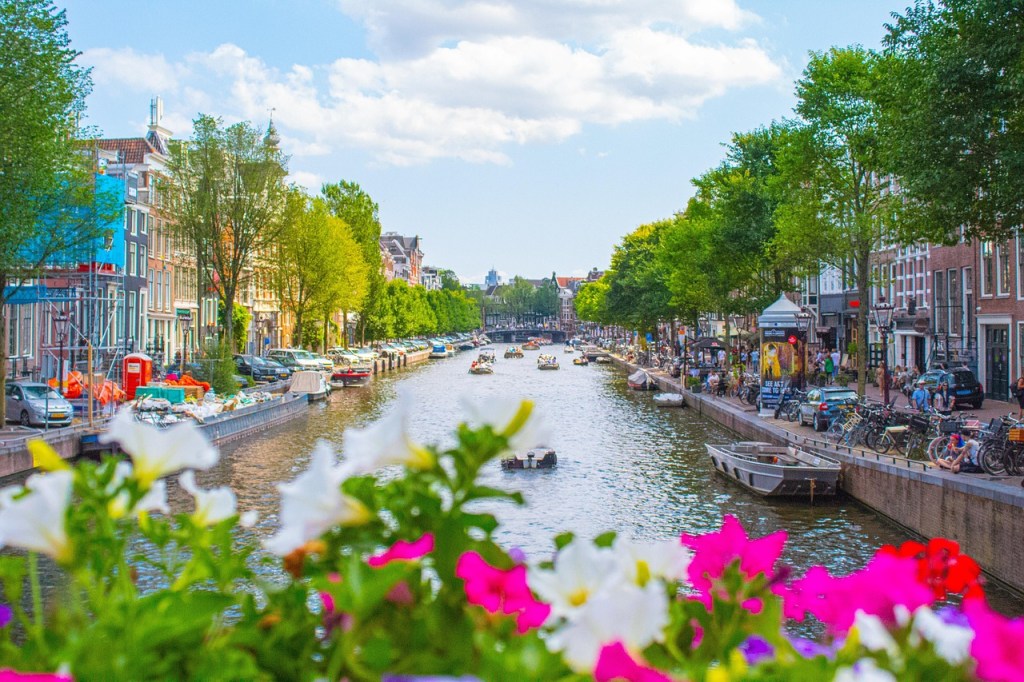
Dutch is an unusual language to learn as a native English speaker because the Dutch are known for speaking brilliant English. As a non-native English-speaking population, they have amongst the best levels of English in the world. It is improbable that I will ever learn Dutch to a level that is better than the average Dutch person’s level of English, despite the language learning apps, grammar books, and language courses. They just have an impressive level of English.
So, is there any benefit to learning the language? Should I instead focus my energy on another language—a more “useful” language like Mandarin? “”We should be learning Mandarin” is regularly used in internet discussions about whether we should stop teaching Irish in schools and remove compulsory Irish from the curriculum. That topic is for another article.
Anyway, is there a benefit to learning Dutch? Absolutely, and here are some of the ones I have found in my experience of learning it:
1. Learning a Language for the Sake of It
I can say that I have a high level of German and Irish, as I live and work in Germany and have a degree in German (Law and German). I can survive comfortably in a professional environment in Germany and have led team meetings in German. My German is far from perfect, and eventually, I will need to find time to take some more German language classes to really sharpen up my skills, but I can speak, read, listen, and write in German.
As for Irish, I went to a Gaelscoil as a child and learned Irish in the best possible manner through immersion. Everything we did in primary school – for eight years – was pretty much through Irish. We didn’t appreciate it at the time. In a bizarre logic, the act of rebellion in the school was speaking English… the irony… so we would do that in the yard (sa clós) during lunchtime… Afterwards, I coached hurling at that school trí Gaeilge, worked on a government account in a call centre on the Irish line, and worked in Gaelscoils as a trainee primary school teacher. So, I have experience of learning other languages.
The difference with learning Dutch for me is that I am under no external pressure to learn it – there is no big exam at the end of the tunnel… I do not need it for my job, degree, or Leaving Certificate. I am learning Dutch – and have been for years – because I want to do it, and it is quite a fun thing to do. It can be challenging to describe to someone who is monolingual, but when you can become comfortable reading another language, it provides such a boost to your confidence. The process and effort of learning the language opens up a new world of books, TV shows, podcasts, music and everything to do with it.
Additionally, it is a confidence booster to say to myself that I can understand another language… It feels more like a DIY project and the kind of satisfaction that one gets when one completes one. However, with a language, there is no real “end goal”; it is more of a system of doing a bit every day possible… I would love to say that I can have a perfectly fluent conversation with someone on all sorts of topics, but the reality is that I cannot… I can read and listen to podcasts on many subjects and understand much of what is said. I can even write about many topics, but my speaking skills need improvement… and that will come as well. Maybe that is also a benefit from learning a language in this manner, I can become aware of what I do not know, and it keeps me grounded and level.
2. Increasing My Empathy
Learning a language in this way has also increased my empathy with non-native English speakers. We all saw the scenes of the US President berating the Volodymyr Zelenskiy in the White House earlier this year… and for everything going on there, it was also a bunch of native English speakers ganging up on someone who is obviously a non-native speaker – and they were doing so on their home environment. They were ganging up on him for many reasons, but one thing that appeared to me was regarding how he formulated his words or thoughts… with no leeway given to the fact that English was his third language… I cannot imagine that particular US President speaking in any other language than whatever you want to call whatever he speaks…
As someone who regularly interacts with other languages – and is in no way perfect in any of them – I am fully there to support those I interact with who do not have English as their first language. If my friends here prefer to speak in German – and are more comfortable doing so – then of course we can switch languages… if someone wants to practice their English, I am more than happy to help them. I know the struggles of what it feels like when the words do not come to your mouth – I have that many times a day…
There is a line in Modern Family that I saw on YouTube of Gloria – from Colombia with Spanish as her native language – saying something like, “Do you know how smart I am in my own language?” and yeah, by struggling to make sentences in Dutch – and at times struggling to follow more complex conversations in German, I fully understand what you mean, Gloria!
3. Chatting With My Tandem Partner
Another benefit of learning Dutch was getting in contact with a tandem partner – well, not really “tandem” in that she already speaks brilliant English – but a really lovely and friendly Dutch woman by the name of Carmen. I went to the Netherlands in 2020 for a small trip between lockdowns in the summer… I experienced the worst sunburn of my life there. In all the Coronavirus precautions, I forgot about taking other ones, such as being Irish and out in the sunshine. That was a bad mistake. Anyway, while in the Netherlands, I realised I couldn’t speak this language very well at all… None of the books, the online videos and courses, Duolingo, etc., prepared me to make the sounds of the language and speak Dutch. So, while I was there, I had to revert back to English most of the time… That was when I realised I needed to find a reason to try and speak the language.
I went on a Facebook page, “Learning Dutch” or something like that, and posted my situation there. Sure enough, Carmen wrote back to me, offering to help me out. Now, I have to admit I was nervous trying out my language skills with a real Dutch person – I simply cannot keep grammar rules in my head while I am talking another language – so all of that goes out the window. But she did her best to understand most of what I was trying to say… and yeah, over the next few months, we would chat once a week or once every two weeks. It was really great!
We do not chat as often at the moment as it is a bit difficult to fit in a lot of extracurricular activities with two small children running around the place. It is hard to get an hour or half an hour free at a socially acceptable hour to get a video call going, but I always enjoy those conversations—even if it puts me a bit out of my comfort zone.
4. Wie is de Mol
One of the best things that came out of having a tandem partner was her recommending a series called “Wie is de Mol?” to me. I do not usually watch reality television shows, but maybe “Wie is de Mol?” proves that I should not base my notions on the genre of television (or book, film, etc.) but on how it is done. Since she recommended “Wie is de Mol?” to me in early 2021, I have watched about nine seasons of the show… and when I started watching, I got a bit addicted to it.
Of course, I can justify it to myself as well. It is a way for me to interact with Dutch for an hour without needing to open a grammar book, get bored, and start scrolling on my phone. If I am going to turn my brain off and consume a television show, I might as well improve my language comprehension by doing so.
“Wie is de Mol?” – “Who is the Mole?” – is a show which brings 10 people together to complete tasks and earn money. In the Dutch version of the show (there is also a Belgian version), the contestants are somewhat known individuals – many journalists, actors and other television personalities take part in it… The show also has helped me learn who Buddy Vedder, Nathan Rutjes, Nikki de Jager, Stijn de Vries, and many more Dutch celebrities are… Anyway, they complete tasks to earn money for the pot – the collective pot – but one of them is the Mole, who is sabotaging the game and tasks while they are happening. The purpose of the show for the audience is to figure out – which of them is the Mole.
Every week, one person is eliminated. They have a test to complete at the end of each episode about the identity and activities of the Mole, and the person who is most incorrect with their answers is eliminated. Do they all work together to earn the money for the collective pot? No, not at all… There are also benefits – trump cards – called Jokers in the game – and Vrijstellings… Jokers turn incorrect answers in the test into correct answers, while Vrijstellings can put a contestant into the next round and next episode. So, many contestants will choose to look after themselves when choosing between earning money for the group or looking after themselves.
The show is set in distant locations, with each season taking place in a different place—China, Oregon, Cambodia, Mexico, Colombia, Albania, Italy… It is simply a fun show that I can watch for free on the NPO app or on the Avro Tros website. I watch it with Dutch subtitles, and each time I start a season, I have to admit that I get invested in it!
Wie is de Mol has become one of my favourite shows in the last couple of years… It is completely free to watch, and I would never have encountered it without learning Dutch and talking to Carmen!
5. Reading Dutch and Engaging with Other Media
I regularly read books in Dutch, and although I do not understand everything… I understand more than enough to get the story; sometimes, I can understand everything closely based on the context of what is happening. This is especially the case when my brain gets into a flow state. Sometimes, it can take a couple of pages to reach that stage, but when I do, my brain automatically takes the words, and I can understand everything (or almost everything) that is happening… Other times, although this surprisingly happens more in German than in Dutch, I can get a bit frustrated reading because although I understand the words I am reading, I do not see the whole forest – I only see the individual trees… For this reason, reading books I already know or on topics I am widely familiar with is very beneficial and more motivating…
Reading brings me into contact with new words to increase my vocabulary, shows me how sentences are structured and allows me to learn more about Dutch (and Flemish) culture. I read a tome of a book about the medieval Burgundians (“De Bourgondiers” by Bart Van Loo) who were the power in the Low Countries during that time. That was a difficult book to work through – again, because of that feeling of seeing the trees but not the forest – but it was fun to read about. Engaging with the Dutch language led me to find out more about this aspect of European history and about Dutch imperial history – fascinating subjects that I wouldn’t have come into contact with without reading Dutch.
Being able to understand Dutch has also allowed me to expand the number of podcasts I can listen to (I have a list of my favourite Dutch podcasts below), the television shows I can watch, the videos I can watch online etc. Being monolingual is really limiting, even if a person might not notice it because of the dominance of English in the media landscape.
6. Professional Cycling
One of the main areas I read about in Dutch – and podcast sets I listen to – is professional road race cycling… I am a big fan of the sport. I love the epic settings, the unpredictability, the struggle, and the moments when the race alights after the very long build-ups. That will be the topic of another blog article.
The Netherlands and Belgium have a remarkable history in the sport of professional cycling, especially in the Flanders area in Belgium. Some of the greatest cyclists in the sport’s history – including the greatest, Eddy Merckx – come from the region. Flemish cyclists of note include Freddy Maertens, Roger de Vlaminck, Tom Boonen, Jordi Meeus, Rik Van Looy, and many, many more… Today, Wout Van Aert, Remco Evenepoel, Victor Campanaerts and Cian Uijtdebroeks are keeping up that tradition.
Flanders is the home of cycling for an entire month of the calendar when Belgian classics season rolls around… that is, around March/April time. Races like Omloop Het Nieuwsblad (the season opener), Kuurne-Brussels-Kuurne, E3 Classic, Gent-Wevelgem, Dwars door Vlaanderen and, of course – the big one – de Ronde van Vlaanderen (the Tour of Flanders) take place during this time. These races are the other side of the sport compared to the mountain peaks and epic scenery of the Tour de France in July… these races are on small, cobbled streets of Belgium… often small, narrow hills with sharp gradients and awful roads. They are fantastic! It is on my sporting bucket list to watch De Ronde in person… on the Oude Kwaremont hill…
However, what does this have to do with Dutch? Flemish and Dutch are very similar. They are pretty much the same language, so this means, as a cycling fan, I have access to many more podcasts, videos on the topic, and books. I was reading an English book about Team Sky in the 2013 Tour de France. It referred to a book about the doping practices in the Rabobank team in the 2000s, including Michael Rasmussen’s removal from the 2007 Tour de France when he was in the yellow jersey… The book in question was one called Bloedbroers (“Blood Brothers”). I wanted to get it because I wanted to read about doping in cycling without it being about Lance Armstrong and his US Postal team. I found it in Dutch, but I couldn’t find it in English, and then I remembered, “Hey, I can read Dutch!” so I got it, understood most of what I read, and it made for a great read. If I hadn’t invested time in learning Dutch, that would not have been an option for me.
Similarly, I was looking for a cycling book on what is often seen as the lesser of the Grand Tours, La Vuelta a Espana. La Vuelta is not as highly thought of as the Tour de France or, historically, the Giro d’Italia… However, it is one of my favourite races of the year. I like Spain as a country, and the Vuelta is usually pretty exciting – the steep ramps of Spain make for fun (and brutal) races! There are many English books about the Tour de France! There are even some about the Giro d’Italia – nowhere near as many as the Tour, but there are some… I couldn’t find anything specifically on La Vuelta… until I stumbled upon a book from the Dutch author Edwin Winkels, “La Vuelta: Heroische Verhalen uit de Ronde van Spanje” (Heroic stories from the Tour of Spain) – and that was exactly what I wanted. I am currently re-reading it, and again, I am so thankful that I invested the time in learning this language!
Conclusion: So, Why Dutch?
If you have reached this stage of the piece, firstly, thank you for getting this far, you might be wondering, “Ok, Oisín, but you could easily have gotten these benefits from learning a more useful language like Mandarin or French”, and yes, I fully agree with you. This article is not about why you should learn Dutch – you do you – but about the personal benefits I received from learning this language. I learned Dutch because it is a bit of a mix of English and German, two languages I was already comfortable with. I learned it because I considered doing my Master’s in the Netherlands before not following through on that idea – but I had bought a book called “Learn Dutch in Three Months” (I didn’t learn Dutch in three months). It seemed like something I could do… I learned it because I remember talking to one of the French girls on Erasmus who did an Italian module on Erasmus because Italian was so similar to French, and that put the idea into my head to try something similar…
I guess the purpose of this article is to say that if you want to do something that interests you and you have people in your life telling you, “It is useless” … maybe pursue that goal anyway. Nobody discouraged me from learning Dutch, but I can certainly understand if people were to say to me it is useless to do so… why not do French or Mandarin… the reality is I didn’t want to… I had no drive to learn them and no extrinsic factor that I could think of that would push me in that direction. From Day 1, I found Dutch quite fun, and it felt like I could crack this and have fun while doing it… it is not for a job or anything else like that – but it is because I want to do it. There was no extrinsic push, but it was just something I wanted to try…
If you enjoy doing sudokus, painting, or playing an instrument but are not very good at it, do it anyway. There is great joy and purpose to be found in the process. If you don’t get very good at it but still enjoy it, what do you have to lose?
Bonus Conclusion: Tips for Learning Dutch
So, you have reached this section and now want to know what you can do to learn some Dutch. Here are some resources I have used to gain some knowledge of the language.
- Learn Dutch with Joy: Back in 2022, I did some online lessons – 10 weeks worth of online lessons with “Dutch with Joy”, and they were really great. I hope in the future to go back and do some more there. The lessons are in small groups of 4-5 people and we had a really nice and helpful teacher – Marietta. Getting lessons from a qualified teacher is always a great way to really learn a language.
- Get a Tandem Partner: Getting a tandem partner/language partner is a great way to get motivated to use the language. I was lucky to get the chance to practice with a native speaker, Carmen, who gave up her time to just have a chat. Reading and listening to different languages – that is all brilliant for the brain – but there is nothing quite like speaking another language. It puts you out of your comfort zone, and you really need to think on your feet!
- #DutchGrammar and Learn Dutch Online: Bart de Pau is a Dutch online tutor and runs the language school/online company “Learn Dutch.org”. This school offers in-person courses and, again, hopefully one day I can take part in them. They sound like Dutch “Gaeltacht” courses – i.e. an immersion environment where you are surrounded by the language for two weeks. His 1000 Most Common Words in Dutch series on YouTube is a good place to start.
- Jumpspeak: Jumpspeak makes quite annoying advertisements at times, and I don’t know if I can say it will “teach you the language in three months” but it is a useful app to have on your phone. I have found it useful anyway. The Jumpspeak style is endless conversations that you listen to and then speak. Other language apps involve flashcards and lots of writing, which I do not find too useful. Although, if you look up “Jumpspeak” or click on their adverts you will get bombarded by them, I have to admit it is the best language learning app I have found. However, as good as apps are – I don’t think anything beats communicating with real people.
- Language Books: The good old fashioned way… the language books. I have used a couple, such as “Dutch in Three Months”, “Colloquial Dutch”, and “Nederlands in Actie”, and they are also worth looking at… especially, when you are starting off with a language. However, think about what you want to do with the language. If you want to speak it, using books only will not help you… A balanced approach between apps, lessons, books and other resources is a nice way to do it.
- Podcasts: I listen to several Dutch podcasts to help me. For learning the language, I can recommend “Dutch Stories”, “Een beetje Nederlands“, and Zeg het in het Nederlands. For more advanced topics, I can recommend “De Dag (NOS)”, “Vandaag (NRC)” and “Universiteit van Nederland”. I love learning about history and history podcasts so I also listen to “Geschiedenis Inside” and “Geschiedenis voor Herbeginners” – the second one is with the Flemish dialect so that is cool to hear! Another nicely made podcast is “De Bourgondiers” by Bart van Loo – I may need to revisit this one as the episodes are very long, and maybe my level of Dutch is now more able to handle it.
Anyway, those are some of my tips for learning Dutch! Thank you for reading – Bedankt voor het lezen!

 Oisin O Mahony Blog
Leave a comment