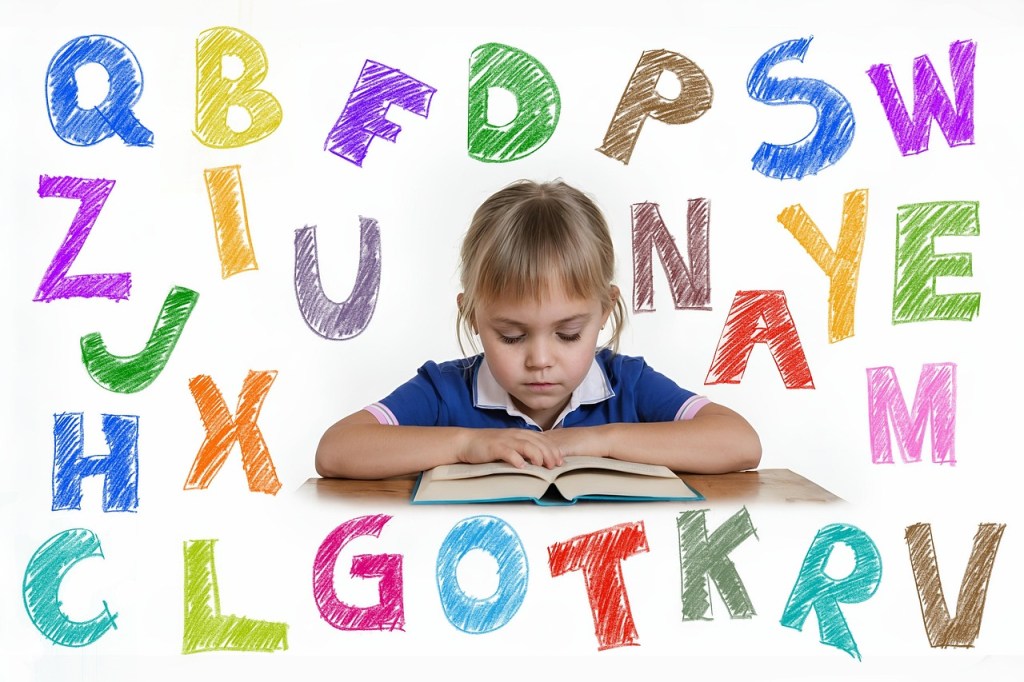
Languages are fascinating. We discover the world through the lens of language, and when we truly consider the diversity of languages, we can appreciate the vastness of the human experience. A “ball” is not just a “ball”, it is a liathróid, it is ” una pelota”, “una palla”, “uma bola”, ਇੱਕ ਗੇਂਦ”, and “一个球” among countless other names.
Side note: I have just started reading “32 Words for Field” by the late, great Manchán Magan, and after one chapter, I am really excited to fully dive into that book. Reading how many words there are in Irish for “hole,” I am excited to see what other gems are in that book.
Raising children in a multilingual household is what we have going on at the moment, as our children receive English from me (and some Irish) and German from my partner. We live in Germany, so I am a bit outnumbered and overwhelmed by the other German inputs that they receive in their daily lives! This is my experience (so far) of the process of raising bilingual children… Please note that, at the moment, our children are very young, and this will likely change as time goes on. this is a snapshot, and far from the finished picture.
Maybe I will put together a Part 2 in a year’s time – as a check-in to see how the adventure is progressing… Bain sult as an ceann seo:
The Impact of Gaelscoil Education
I was fortunate growing up, as I was able to attend a Gaelscoil. As some of you who stumble upon my blog are not from Ireland, I will explain the concept of the Gaelscoil. A Gaelscoil is a school where everything (besides English) is taught through Gaeilge/Irish. So, my everyday experience with friends and family at home was through English, but in school, for however many hours a day for eight years, everything was through Gaeilge. That early experience has allowed me to retain my Gaeilge – mostly my spoken and aural Irish as I do not write a lot in the language – and it has even allowed me to start my own podcast series, “Gaeilge Thar Lear”.
(On a side note for future me, this may be the right platform to get back into writing as Gaeilge.)
I was fortunate with this experience, not only because it allowed me to fully embrace the underlying beautiful first language of my island (if not the country itself), but it also provided me with all the benefits of learning a second language as a child. It also meant that, as an English speaker, I had exposure to the challenges of communicating through another language from an early age. This experience gave me a great deal of empathy and understanding for those struggling with their English when it is not their native language. It also encouraged me to learn other languages, such as German and Dutch.
It also truly showed me that learning a language at a young age is an incredible way to do it. As a child, you are not inhibited by thoughts of failure or have preconceived notions that you “are not good at learning languages.” Similarly, you are not learning a language for the sake of an exam or a career – it is not an extrinsic thing; instead, you are learning it because it is all around you. You can engage with it in a very different and open way.
However, on the other hand, adults learn languages because, often (but not always), they genuinely want to, and they can focus on the exact areas that interest them, which can also make a difference. Perhaps it is the difference between jumping into something headfirst without knowing the reason, as a child, and taking it in entirely without inhibition, versus a more deliberate, yet slower, form of learning – both have their advantages and disadvantages. However, learning Irish as a child has been of enormous benefit to me.
Bilingual Children – the Expectations
After our first child arrived, I had this expectation that it would be straightforward to expose her to English and Irish, and that it would be relatively easy… especially English but I had hopes for some Irish as well. I thought, if mama speaks German, and I speak English, it’ll be grand… She’ll learn to speak with no problems. She’ll develop an interest in languages and it would be easy.
When she arrived I started pretty ambitiously by reading Harry Potter agus an Órchloch with her – Harry Potter as Gaeilge. Of course, when they are just after arriving, you cannot expect too much. It was for me to get into the habit of reading aloud to her, and I learned that Irish should be read aloud – it sounds so much better that way! A personal favourite is the Irish translation of Julia Donaldson’s “A Squash And A Squeeze” – “Mo Theachín Gan Chuma Gan Chaoi” – that sounds great as Gaeilge.
After that we read to her every day and every night, several kids’ books a night. We read in English, Irish and German – occasionally in Spanish as well for the craic. I didn’t expect her to become some child prodigy reader by the age of two – again, it was mostly for myself – to give me something to do with her! We bought and received a lot of books for her – her bookshelf is now more impressive than most people’s – and we made sure to give her a lot of exposure to different types of stories and styles.
You often hear that young children are like sponges, absorbing everything they encounter – they take everything in. You read about how they can learn languages so much faster than adults… However, there are different ways to learn languages… and just because they “take everything in” does not mean they necessarily give everything out… at least not right away.
She Starts Talking
It takes a while for the talking to start. It starts with single words, and the thing with “the first word” is that it is more difficult to process in real time. We found it to not quite be like the movies or TV shows… Where is the border between individual sounds that may be words or sound like words, and words themselves… Did she just say “mama” or did she make a sound that sounded a bit like “mama”? We think her first was “nein” which contrasts with our younger daughter’s first word being “ja”, and that is the story we were going with…. What we mean by this is that our eldest daughter said “da” for a long time and it took us a very long time to realise she was actually saying “ja”/”yeah”…
Moving on from the very first word, for a long time she said individual words… “mama”, “da”, “nein” and so forth… but not really in a row or forming sentences… One day at dinner it really started. I would regularly ask her about her day with the Tagesmutter (child minder) while we were at work, and she would regularly reply back with the names of the other children there but very much individually… That night she said them all in quick succession, and repeated them in quick succession and that helped her get used to the idea of combining words. It was really incredible to see in real time!
From there, it really accelerated for her, and within days and weeks, she started combining all sorts of words together, and soon afterwards, she began creating complete sentences. Of course, just to note this was all in German – auf deutsch. After a while, our Tagesmutter reported back that, in twenty years of caring for children, she had rarely encountered a child with such an impressive ability to speak in complete sentences at such a young age. We were, of course, very proud of her!
I thought that it would be a matter of time before something similar would happen with her English skills… but it has not quite been that easy.
The Siebenschläfer Enters the Conversation
Bobo Siebenschläfer… Oh, Bobo… Bobo…
In preparation for the arrival of our second child, my partner bought a book for our eldest daughter about becoming an older sibling – one from a popular series of books in Germany called Bobo Siebenschläfer – “Bobo Siebenschläfer bekommt ein Geschwisterchen”. Bobo Siebenschläfer is a very popular series in Germany, about a dormouse and his family.
(“Siebenschläfer” is the German word for “dormouse”.“Luch chodlamáin” is the Irish word which I found to be really nice!)
Bobo is the toddler of the family – and he goes on very toddler-style adventures… In some ways, the stories are quite nice and very toddler-friendly. The adventures are small and relatable for small children… Bobo’s adventures include flying kites with his grandparents, going for walks with his parents, getting an ice cream, and seeing it fall on the ground, and so on… They are nice stories, but not the most adventurous. They are great for the target audience to learn about the world, but as the parent reading it, they are not exactly incredible page-turners! They are great for what they want to be – relatable “adventures”, easy language, a small cast of characters and very safe – ideal for toddlers.
Bobo and his adventures are not bad per se; however, it is when you end up reading the same stories every single night that you really feel it… I remember hearing about parents being driven crazy by “Frozen” and thinking that the film isn’t too bad – I quite enjoy it – but after my Bobo experience (my ongoing Bobo experience, 15 months+ later), I fully understand your perspective. We have a house full of books… They have more books than most adults… but every single day for the last 15 months, we have read at least one Bobo story. I have bought additional Bobo books because I couldn’t stand the thought of reading “Bobo Siebenschläfer bekommt ein Geschwisterchen” again… If she was not going to look at anyone else, or give any other story a chance, at least we can change up the Bobo “adventures”.
So, now we have four Bobo books in the house with more coming soon.
What this has to do with bilingualism is that now we read fewer English (and Irish) books. Whereas before Bobo, we read something different every night – now pretty much every night involves Bobo, and if we are lucky, maybe one other story… I have read Bobo in English and Irish to try and get around it, but now she has become too smart for that, and insists on having them read in German. This has dramatically reduced my chance to properly read to her in English – and to enjoy the other books on the bookshelf… there are only so many times you can read the line „und Bobo ist ganz gemütlich in Papas Armen eingeschlafen“, without craving something new!
Of course, this is a natural stage of development. She is now expressing her own independent wishes. Dada no longer makes all the decisions about what she reads… and her negotiation tactics of tantrums, knocking books out of my hands, crying, and talking over me reading win out over my tactic of trying to calmly explain that we could try something else for this night… In theory, it is nice to see her becoming more forceful in what she wants… but it is also a pity. We tried to strike a balance by saying that Dada would read English books with her, and Mama would read German books with her… but that has just resulted in Dada not being allowed to read, or only if he reads Bobo in German. Outfoxed by a two-year-old… not my best moment!
The Reality (at the Moment)
Of course, it is really early in the process… and we know that one day it will work out. However, it does not invalidate the feeling of right now, in this moment. That feeling is a bit of disappointment… Here she is constructing full conversations in German and really interacting with the world in German, while not really saying more than single words in English – if I am lucky. I guess something I didn’t really factor into account much is that, outside of me, pretty much her entire world is German. Her childminder spoke German with her, other children around her speak German, their parents speak German with us, and the other side of the family (who she interacts with more often in-person) speak German with her – and around her. She does not have a clue about the benefit of bilingualism, and the value of speaking English – she’s two.
Right now, she prefers to talk to Mama because she can speak more Deutsch to Mama… However, she does understand pretty much everything I say. She knows precisely what words mean. In fact, she knows the meaning of quite a few words in Irish as well (we strategically named some of her teddies in Irish – so hopefully, she will never forget the meaning of words such as madra (dog), coinín (rabbit), and puifín beag (little puffin)). Therefore, the language is embedding itself in her brain, and I know logically she will eventually speak it. I even read that what often happens is that bilingual children will one day just burst out with a lot of their second language – in the way she did with German when she named her friends’ names in quick succession.
However, sometimes the logic side can still play a secondary role. It is a bit of a strange experience when your child doesn’t speak your language, and it feels a bit like they reject it. This may not be what is really happening, but it just feels that way. It can honestly be really frustrating at times… and it is a strange feeling when your child doesn’t speak your first language. You know, logically, that this will change eventually, but right now it is hard. It is especially hard when she seemingly rejects it by insisting on books in German or insisting on music in German etc.
The Future
I know that she will soon start speaking English as well as German. I will continue talking to her, reading to her, putting on English CDs and DVDs (“Aristocats” and “Robin Hood”!), and everything else we can think of to encourage her. We started holding an English-language playgroup at our apartment to encourage her and to invite our friends over more often. In maybe a year’s time, this post will be quite obsolete, and I will think that I reacted too much to this… Time moves quite differently with small children – “the days are long but the years are short” – and you really shouldn’t overburden an almost three-year-old. Even with all those caveats, does it invalidate that feeling of slight rejection in the here and now? Who knows… I am not exactly giving up on our relationship, nor do I believe it is irreparably damaged (obviously)… but it is somewhat deflating at this moment in time.
I am excited to see what the future will bring. I am excited to hear what she will sound like when she speaks English… will she do so with an Irish accent? That would be pretty funny when she starts learning English in school (the Germans seem to love their UK-English in schools)… Will she become a “know-it-all” and try to correct teachers? That is something we will have to try to prevent from happening (at least too openly). Will she develop an interest in Irish? Will I then need to step up my own Gaeilge and really figure out some of the aspects I am not as sharp on? (Gramadach/Grammar)… Will she fulfill my dream for her of one day spending some time in a Gaeltacht?
The answer to all those questions right now is, who knows? I, for one, don’t know, but I am excited to see what the future brings. It is (cliché, cliché) a marathon, not a sprint, but as I have hit my mid-thirties, I have taken up marathon-running so I am ready for the challenge. It will be great to see what will happen next and find out who they will be. Whatever happens, it will be part of the great adventure of life, and we are ready for it.
If you are going through the same thing I am, I suppose all we can do is hold on, keep going, and allow our future selves (who will know that we have rocked this bilingual child-raising adventure) to laugh about our current uncertainties. We’ve got this.

 Oisin O Mahony Blog
Leave a comment