This is the second part of my Game of Thrones story. If you haven’t read Part One, it covers the books, the show, and the years when Game of Thrones was genuinely extraordinary. This part covers what came after.
Lengsdorf, Bonn, April 2019
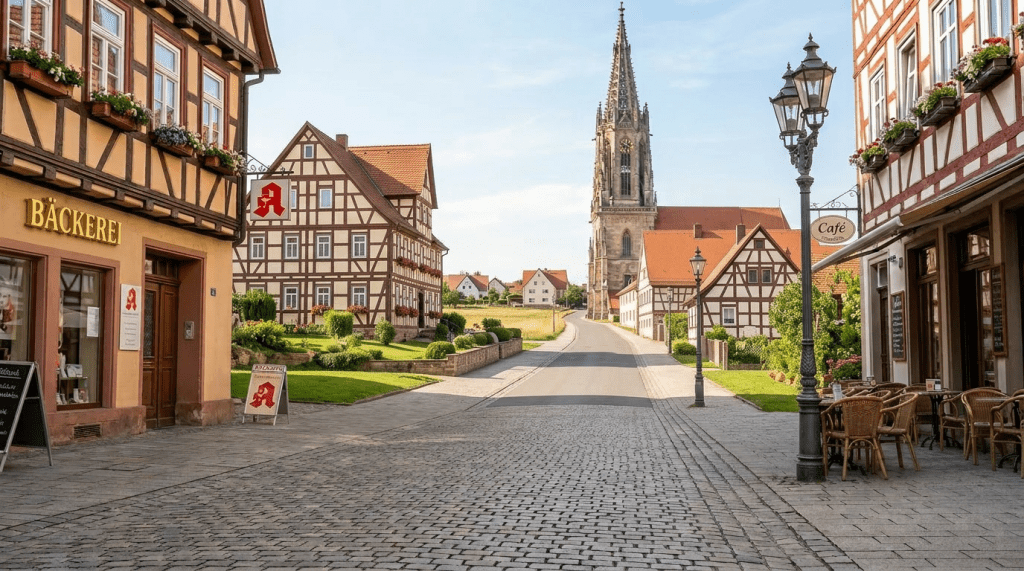
It is a Monday afternoon and I am walking around Lengsdorf – a quiet neighbourhood in Bonn, my new home – with headphones on, listening to a YouTube video from a channel called Nerd Soup. They are discussing The Long Night, the big battle episode from Season Eight. I am not entirely sure what I think of it yet. Three episodes still to come. I am listening to other people talk about it partly to figure out how I feel.
I had just moved to Germany – and this time, as Freddie Mercury once put it, I know it’s for real. My girlfriend is at work. I have no social structure here yet beyond her. It is a Monday afternoon and I am walking around a city I do not know yet, listening to a podcast I did not know was a podcast, trying to process a television episode I am not sure was good.
That context matters for understanding what Game of Thrones meant to me in those final weeks.
On the Floor
Season Eight arrived at one of the more difficult points in my life up to that point. I had just finished a Master’s in Primary Teaching – a qualification I had pursued with genuine effort but which, if I am honest, was never the right path for me. What I do now – legal writing, translation, content – suits me far better. But at the time I did not know that yet.
The teaching placement had been particularly hard. Five weeks with junior infants, a break, then an observation week with fourth class – and it was during the half-term that followed that observation week, just as I was about to begin four weeks of teaching, that my body made its objections known. Inflammatory mono-arthritis. My knee swelled to twice its normal size. I could not walk. I spent a week in hospital with no clear diagnosis and came out still needing to finish the placement and write a thesis. Seven years later I run half-marathons. At the time I was nearly broken.
Starting out in Germany – new city, new country, no job, no plan – I was not ready to work. I bought a NowTV pass for three months and every Monday, when my girlfriend left for the office, I watched the new episode of Season Eight as it arrived. I reread the books. I listened to Nerd Soup and similar channels while walking through Bonn, discovering my new home.
Game of Thrones was a companion during that transition – a familiar world when everything else was unfamiliar. A comfort blanket. I knew I would have to find a job and start my life properly. But not yet. Not while there were still episodes left.
The Verdict on Season Eight
Season Eight is now infamous. Search for any list of the worst television endings in history and it will be there. The question worth asking is whether I knew at the time.
Honestly – not fully. There were good moments watching in real time, and I was pleading with it to be worthy. The goodwill accumulated over eight years of investment was enormous. I also knew that David Benioff and D.B. Weiss were working without a finished source – George R.R. Martin had not written the ending, and in 2026 he still has not – so I was inclined to be generous.
But generosity has limits. By the end, I had to admit to myself that it was not good. Not at all.
The clearest example for me was Episode Five – The Bells. Watching Arya Stark run through a burning King’s Landing, there was genuine tension – she could not possibly survive this. Except, of course, you know she does. And once you know she does, that tension collapses entirely. The experience of watching is changed permanently by the knowledge of the outcome. That is a specific problem that good storytelling avoids and Season Eight created repeatedly.
It was not simply that the ending was bad. It was that a bad ending reached backwards and changed everything that had come before it. The years of following the story, building theories, debating possibilities – they felt, in retrospect, wasted.
The Cracks Were Already There
What the Season Eight conversation tended to obscure was that the problems had not started with Season Eight. There was a meme circulating at the time showing a horse broken into pieces – the first seven sections beautifully formed, the final section a mess. The implication was that everything had been perfect until the last season. Looking back honestly, the cracks had been there for longer.
I watched Season Seven with my brother over the Christmas period of 2017 – that pleasant week between Christmas and New Year when nobody knows what day it is. We watched all seven episodes in two days. I had been too busy to watch it when it aired that summer, which tells you something about how my relationship with the show had shifted. And I had just failed a teaching placement by two percent, so I was ready for Westeros.
Season Seven was fast food. Spectacular in the moment – big battles, long-awaited reunions, characters moving across the map at implausible speed – but hollow on reflection.
The Loot Train Attack is a good example. The sequence in which Drogon and Daenerys descend on the Lannister forces returning from Highgarden is genuinely extraordinary – and it should be, given how long we had waited to see dragons used in open warfare. But the scene is undermined by what follows. Jaime Lannister, watching Daenerys on dragonback, makes the arguably suicidal decision to charge directly at her with a lance. He is unhorsed, falls into a nearby body of water in full armour, and is dragged under by Bronn diving in after him. Both survive. In the seasons that had gone before, that scene would never have been written – because both characters would have drowned. The show had quietly begun suspending its own logic in the service of keeping useful characters alive.
Beyond the Wall pushed this further. Jon and his companions are stranded on a rock surrounded by the dead, waiting for rescue. Gendry is sent sprinting back to the Wall to send a raven to Daenerys. The raven arrives. She flies three dragons north. All of this appears to happen in a matter of hours, across distances that in earlier seasons had taken weeks to travel. The geography of the world – previously treated with considerable care – is simply set aside because the plot requires it.
But this points to something larger than geography. The show had developed what fans call plot armour – the sense that certain characters would survive whatever the script threw at them, not because the world’s internal logic permitted it, but because the writers had decided they were too valuable to lose. Jaime and Bronn survive the lake in full armour. Gendry, whose storyline had concluded seasons earlier, is brought back because audiences liked him – not because the story required him. Bronn’s arc was essentially complete after Tyrion’s trial in Season Four. He should have been written out. Instead he was kept alive by affection, and that affection quietly replaced the internal logic that had once made the show feel genuinely dangerous.
In Season Six, Arya is stabbed multiple times and thrown into a filthy river. She survives. The shock lands on first viewing. But on rewatching, knowing she survives, the scene collapses entirely – it becomes false jeopardy, a performance of consequence without actual consequence. The early seasons had real consequence. Ned Stark died. The Red Wedding happened. You never felt entirely safe watching. That feeling of genuine danger was central to what made Game of Thrones so compelling – and it was precisely what the later seasons abandoned.
The deeper problem was that you could see behind the curtain. Things happened because the writers wrote them that way, not because the world itself demanded them. And once you can see the hand operating the mechanism, the immersive experience is gone. You are no longer inside Westeros. You are watching a television production make decisions.
The dragons arrive at exactly the moment the script requires. You watch it all happen, and you feel the foundations giving way beneath it.
Fast food. Great while you are eating it. Think about it for ten minutes and it dissolves.
How It Went Wrong
There are hundreds of video essays and articles analysing what happened to Game of Thrones, and I am not going to cover the same ground exhaustively. But I have my own view.
Season Four was the high point. The first four seasons were extraordinary. After that, the decline began. The show had broken out of its original audience – history and fantasy enthusiasts – and become a genuine mainstream phenomenon. Sex, violence, spectacle, everyone talking about it. That popularity created pressure to deliver moments on a regular basis.
But the great moments of the early seasons were great because they had been earned. Consider the Battle of Castle Black at the end of Season Four. By the time that battle arrived, viewers had spent 39 episodes with Jon Snow and the Night’s Watch – learning about them, understanding their relationships, their world, their purpose. 39 episodes. That is the investment that made the battle matter. When the giants came through the tunnel, when Jon went outside the gate, you felt it. The later seasons tried to manufacture equivalent spectacle without equivalent investment, and the difference was always visible.
The Red Wedding worked because of everything built before it. The Viper versus the Mountain worked because of Tyrion’s trial, because of everything Tyrion had survived, because of what losing meant. You cannot shortcut that process and expect the same emotional result. Benioff and Weiss understood how to adapt Martin’s world. What they could not do – or chose not to attempt – was build that kind of foundation themselves once the source material ran out. If they had handed those final seasons to other writers, they would be remembered very differently. But that conversation did not happen.
What Was Lost
The specific damage a bad ending does to a serialised story is different from what a bad film or a bad standalone novel does. With something episodic – The Simpsons, Frasier, Friends – you can always return to the good episodes. The poor later seasons do not contaminate the earlier ones. They exist alongside them.
Game of Thrones cannot be watched that way. The breadcrumbs and callbacks and long-running threads ask you to trust that the journey is worth taking. When the destination fails, that trust is broken, and going back becomes complicated. Burnt once, twice shy.
My girlfriend – who has never watched the show – asked me at one point whether she should start. I told her it was not a good idea. The journey is too central to the experience. Knowing the ending changes everything about the watching. That is not something I could protect her from.
After Season Eight, I went from watching the show regularly – returning to favourite seasons, rewatching key episodes – to barely watching it at all. In seven years I have perhaps watched Season One once. The doors closed.
A Moment That Will Not Be Repeated
I have come to think that what Game of Thrones represented, at its peak, was something that cannot be manufactured again – and not primarily because of the quality of the writing.
Consider what was happening by the time Season Eight arrived. People had been reading these books since 1995. Some of them had been invested for nearly a quarter of a century. The television audience had joined from 2011. And there, in 2019, both groups were converging on the same question: how does it end? Nobody knew. Not the book readers, not the show watchers, not – very possibly – George R.R. Martin himself.
That is an extraordinary situation. A story genuinely open, with millions of people searching for the answer simultaneously, from different starting points. The book readers had more context in the early seasons. As the show moved beyond the books, everyone was equal. Everyone was guessing. Everyone was on the same adventure.
I thought when Stranger Things became a phenomenon that something similar was happening. And in some ways it was – the internet was buzzing, the memes were everywhere. But the worlds are not equivalent. People loved the characters of Stranger Things – Steve and Dustin, the dynamics of that group – deeply and genuinely. But Hawkins, Indiana is not Westeros. It does not have thousands of years of history behind it, dozens of competing factions, a mythology that fans spent years excavating. The analysis was different in kind. The depth was different.
Game of Thrones also existed at a particular technological moment – before streaming made dropping entire seasons at once the norm. You waited a week between episodes. You sat with what you had seen. You talked about it. Everyone watching was at the same point in the story when the conversation happened online. That shared rhythm is gone now.
And even if all of those conditions could be recreated – the unfinished source material, the appointment viewing, the cultural saturation – I am also in a different phase of life. During those years of watching Game of Thrones, I had no clear sense of where I was going. Many doors were open. I was not always comfortable with that uncertainty.
Now there are young children to collect from the Kita, a career that makes sense, a home, a routine. The hours I once spent deep in fan forums analysing the House of the Undying are not available to me any more. I do not miss them, exactly. But I notice their absence.
Lengsdorf, Revisited
Walking through Lengsdorf in April 2019, headphones on, listening to Nerd Soup talk about The Long Night – I did not fully know that what was ending was not just a television show.
A particular stretch of my life was ending too. The years of uncertainty, of moving between countries, of not quite knowing what came next – they were coming to a close. Bonn was the beginning of something more settled, more deliberate. And Game of Thrones – which had followed me from Cork to Marburg to Dortmund and now here – was along for those final weeks as a familiar companion during an unfamiliar transition.
It was good to have it there.
Even if the ending, when it came, was not what any of us had hoped for.


Leave a comment